


A sósav tisztítja az akril pezsgőfürdőt?
2026-03-27 15:30When cleaning a bathtub, different chemical cleaning agents can yield vastly different results. Faced with stubborn limescale, sediment, or mineral spots, some consumers might wonder: "Can I use muriatic acid to quickly dissolve this grime?"
Hydrochloric acid (also known as muriatic acid) is a strong acid commonly used for industrial descaling, swimming pool maintenance, and the removal of heavy mineral deposits. However, when the subject turns to acrylic spa hot tubs, the question of whether using muriatic acid is safe or feasible becomes a matter that requires extreme caution.
To avoid damaging the tub's structure and to ensure safe usage, this article will provide a comprehensive explanation covering:
✔ Whether muriatic acid is suitable for acrylic materials
✔ The dangers associated with using muriatic acid
✔ Why acrylic materials should not come into contact with strong acids
✔ How to properly clean an acrylic spa hot tub
✔ How to remove limescale or stains without damaging the surface
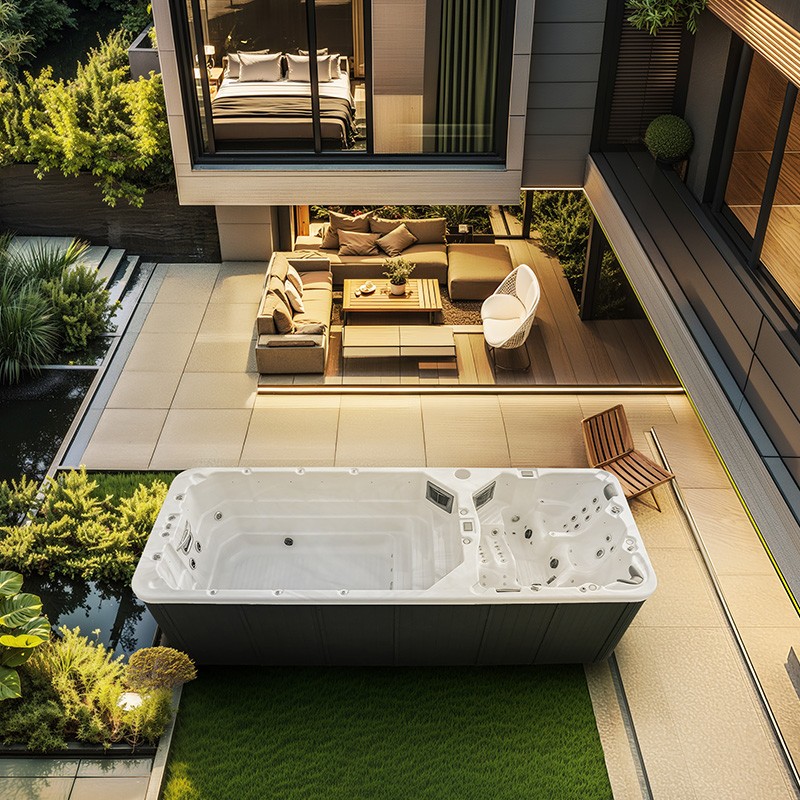
Can Muriatic Acid Clean an Acrylic Spa Hot Tub? Is It Safe?
No, muriatic acid should not be used to clean an acrylic spa hot tub.
Muriatic acid at any concentration—including so-called "diluted muriatic acid" or "heavy-duty acidic bathroom cleaners"—
is unsuitable, unsafe, and not recommended for use on acrylic spa hot tubs.
The reason is crystal clear:
Acrylic material (PMMA) is not resistant to strong acids; muriatic acid will cause chemical corrosion, resulting in a loss of luster, softening of the material, and even cracking.
Next, let's break down this destructive mechanism from a scientific perspective.
Why Can't Muriatic Acid Be Used on Acrylic Spa Hot Tubs? What Damage Does It Cause?
To fully grasp the risks involved, we need to understand the chemical reactions and physical damage that occur between muriatic acid and acrylic.
1. Acrylic Undergoes Chemical Corrosion When Exposed to Muriatic Acid
Acrylic (PMMA) is a polymer material that is highly sensitive to strong acids.
Muriatic acid disrupts its molecular chain structure, leading to the following material degradation:
•Surface corrosion
•Material softening
•Formation of micro-cracks
•Discoloration and clouding
This type of damage is typically irreversible.
2. Hydrochloric Acid Damages the Smooth, Non-Porous Surface of Acrylic
One of the primary advantages of an acrylic spa hot tub is its:
✔ Smooth finish
✔ Non-porous structure
✔ Water-resistant nature
✔ Ease of cleaning
Corrosion caused by hydrochloric acid roughens the surface, destroying its original non-porous structure.
This leads to:
•Increased accumulation of dirt and grime
•A higher risk of bacterial growth
•Greater difficulty in cleaning
•A loss of surface luster
This will significantly reduce both the lifespan and the overall enjoyment of the acrylic spa hot tub.
3. Strong Acids Can Cause "Stress Whitening" on Acrylic Surfaces
When acrylic is subjected to chemical corrosion, a phenomenon known as "stress whitening" occurs. This manifests as hazy, smoke-like streaks on the surface, compromising its aesthetic appeal.
This type of damage is irreversible and can only be remedied through professional polishing or the replacement of affected components.
4. Hydrochloric Acid May Corrode Internal Metal Components and Fittings
Even if you intend only to wipe down the surface, hydrochloric acid can seep into the interior of the hot tub, causing:
•Corrosion of screws and fasteners
•Damage to the metal components of the heating element
•Deterioration of rubber seals within the plumbing system
•Brittleness or deformation of jet nozzles and fittings
This compromises the proper functioning of the acrylic spa hot tub and may even lead to water leaks or electrical safety hazards.
5. Hydrochloric Acid Fumes Can Also Damage Acrylic
Even without direct contact, the acidic fumes emitted by hydrochloric acid are potent enough to damage the acrylic surface, causing it to become cloudy and rough.
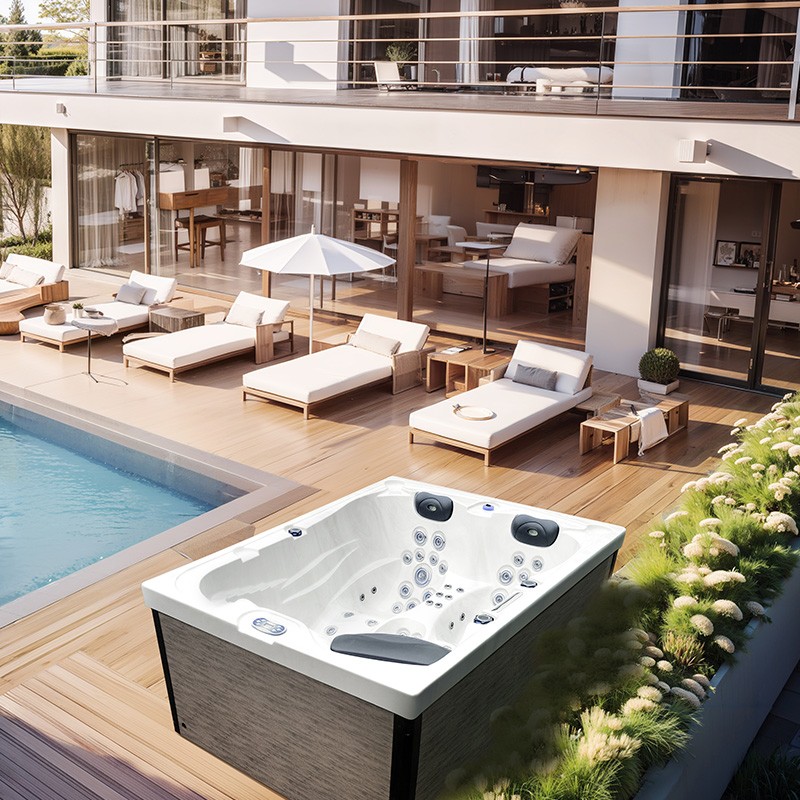
What are the long-term consequences of accidentally using hydrochloric acid on an acrylic spa hot tub?
Many of the "damaging effects" do not appear immediately; instead, they manifest gradually over the course of several days or weeks:
✔ The surface begins to look dull and hazy
A loss of luster is the most common symptom, and it cannot be remedied through ordinary cleaning methods.
✔ Fine cracks (micro-cracks or "crazing") begin to appear
These cracks trap dirt and grime, making the hot tub increasingly difficult to clean.
✔ Deformation occurs around the jet nozzles
The plastic material of the jet nozzles may expand or become brittle due to exposure to strong acids.
✔ Plumbing seals deteriorate, potentially leading to chronic leaks
✔ The acrylic surface becomes increasingly prone to dirt accumulation
Once the surface becomes rough, dirt adheres to it more easily—creating a vicious cycle of grime buildup.
In short:
Hydrochloric acid is not a cleaning agent; rather, it is a hazardous substance capable of rapidly destroying the structural integrity of acrylic spa hot tubs.
Why do some people mistakenly believe that hydrochloric acid is suitable for cleaning acrylic spa hot tubs?
The reason is not that hydrochloric acid is actually suitable, but rather:
1. Hydrochloric acid does indeed dissolve limescale quickly
Strong acids can easily remove:
•Calcium carbonate limescale
•Hard water deposits
•Rust
However, these properties do not mean that it is safe for acrylic surfaces.
2. Some traditional bathroom materials can withstand hydrochloric acid
Such as:
✔ Ceramic tiles
✔ Enamel-coated steel bathtubs
✔ Ceramic basins
These materials are acid-resistant, leading people to the mistaken belief that "all bathtubs can be cleaned with hydrochloric acid."
3. Some acid-based cleaners on the market fail to specify material restrictions
This leads users to mistakenly apply them to acrylic spa hot tubs.
Ismétlem:
Szennyeződésoldás ≠ Akril jakuzzik tisztítására alkalmas.
Mivel sósav nem használható, hogyan kell tisztítani a foltokat az akril pezsgőfürdőben?
Az akril pezsgőfürdőt hatékonyan tisztíthatja erős savak használata nélkül; léteznek biztonságosabb és kíméletesebb módszerek is.
Hogyan végzed a napi rendszeres takarítást?
Használat:
• Meleg víz
• Enyhe, pH-semleges mosószer
• Puha kendő vagy szivacs
Ezek elegendőek a legtöbb folt eltávolítására.
Hogyan kell eltávolítani a makacs foltokat?
Ha szappanlerakódás, zsír vagy vízkőlerakódás jelenik meg a felületen, használhatja a következőket:
✔ Fehér ecet (gyenge sav)
✔ Szódabikarbóna (enyhe dörzsölőszer)
✔ Kifejezetten akrilhoz kifejlesztett tisztítószerek
A fehér ecet az egyik legbiztonságosabb módszer a vízkő kezelésére, és nem károsítja az akrilt.
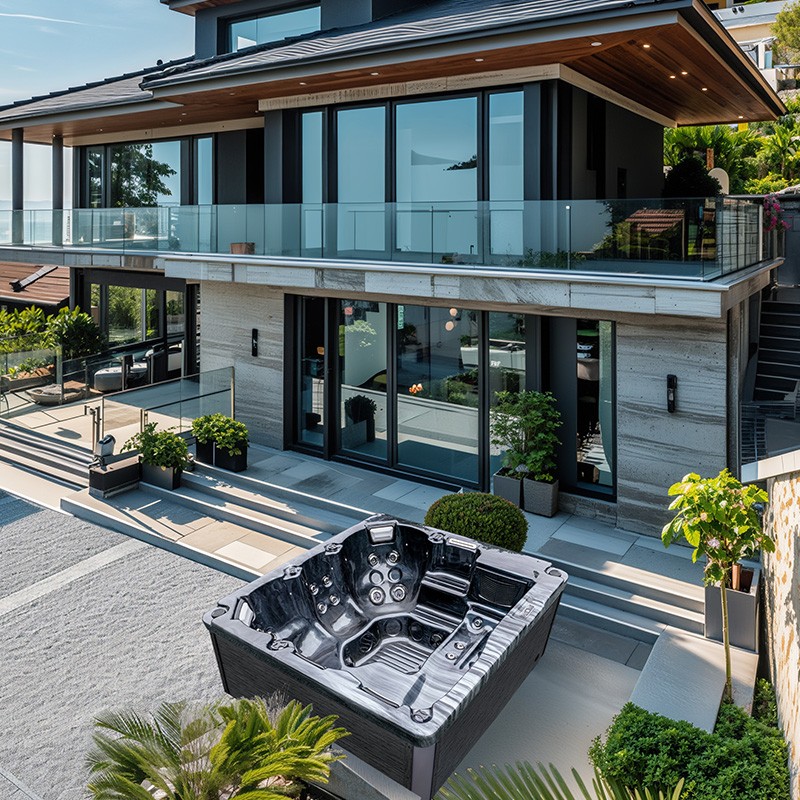
Hogyan tisztítod a fúvókákat és a vízvezetéket?
Használat:
• Meleg víz
• Kifejezetten akril pezsgőfürdőkhöz tervezett vízvezeték-tisztító
• Hígított fehérítő (kövesse az utasításokat)
Megjegyzés: Hipó használható, de erősen hígítva kell lennie, és nem szabad hosszabb ideig a felülettel érintkezni.
Ezzel szemben a sósav erős sav, és soha nem szabad használni.
Hogyan végezzünk alapos vízkőtelenítést? Mivel a sósav tilos, vannak alternatívák?
Igen, a következő módszerek teljesen biztonságosak akrilra:
1. A fehér ecet és a meleg víz áztatási módszere
Enyhe és közepes vízkőlerakódás esetén alkalmas.
2. Akrilra is alkalmas vízkőoldók
A piacon kifejezetten akril pezsgőfürdőkhöz kifejlesztett termékek kaphatók.
3. Citromsavoldat (élelmiszeripari minőségű)
Enyhén sav, amely nem károsítja az akril felületeket; rendkívül hatékony az ásványi lerakódások ellen.
4. Professzionális akril polírozó
Visszaadja a fényt és eltávolítja a kisebb karcolásokat.
Ezen módszerek egyike sem igényel sósavat, és sokkal biztonságosabbak és hatékonyabbak, mint a használata.
Használható hígított sósav? Biztonságos?
Sokan kérdezik:
„Ha nagyon alacsony koncentrációjú sósavat hígítok, akkor használhatom-e a sajátomon?”akril pezsgőfürdő?”
A válasz továbbra is így marad:
❌ Nem.
Még rendkívül alacsony koncentrációban is a sósav:
• Az akril felületbevonat károsodása
• Korrodálja a fúvóka alkatrészeit
• Sérüljenek a fém szerelvények
• Káros füstöket bocsát ki
A sósavat – bármilyen koncentrációban – tilos akril pezsgőfürdőn használni.
Vannak olyan fürdőkád-anyagok, amelyeket sósavval lehet tisztítani?
A félreértések elkerülése végett az alábbiakban felsoroltuk a sósavval tisztítható anyagokat:
✔ Kerámia
✔ Porcelán csempe
✔ Zománcbevonatú acél
Viszont:
❌ Akril
❌ Üvegszálas
❌ Bizonyos típusú mesterséges kövek
❌ Kompozit műanyagok
Ezen anyagok egyikét sem szabad sósavval tisztítani.
Visszafordítható-e a sósav akril pezsgőfürdőkben okozott károsodása?
A legtöbb esetben:
❌ A kár visszafordíthatatlan.
Bár a károk egy részét a következőkkel lehet enyhíteni:
• Polírozás
• Gyantázás
• Felületbevonat javítása
Kérjük, vegye figyelembe, hogy:
• A repedések nem javíthatók
• A szerkezeti károsodás visszafordíthatatlan
• Az elszíneződés és a korrózió visszafordíthatatlan
Ezért a legjobb megközelítés a következő:
Kerülje a sósav használatát, ahelyett, hogy később megpróbálná helyrehozni a károkat.
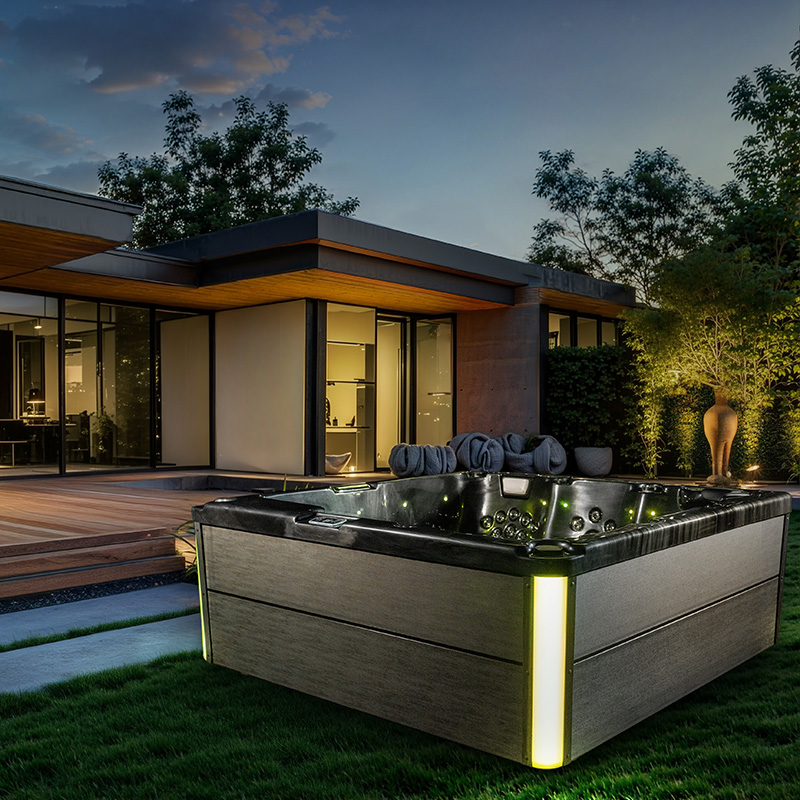
Használható sósav akril pezsgőfürdő tisztítására?
❌ A sósavat soha nem szabad akril pezsgőfürdő tisztításához használni.
Az okok többek között a következők:
• Korrodálja az akril felületeket.
• Károsítja a fúvókákat, a vízvezetékeket és a fém alkatrészeket.
• Elszíneződést, repedéseket és felületi érdességet okoz.
• Visszafordíthatatlan károsodást okoz.
• A gőz szintén okozhat korróziót.
Alternatívák:
✔ Fehér ecet
✔ Citromsav
✔ Szódabikarbóna
✔ Enyhe mosószerek
✔ Speciális akriltisztítók
Ezek a módszerek egyszerre biztonságosak és hatékonyak, és teljes mértékben képesek kielégíteni mind a napi karbantartási, mind az alapos tisztítási követelményeket.
Hogyan kezeli a LOVIA SPA a nagyméretű úszómedencék gyártását?
A LOVIA SPA szabványosított gyártási folyamatok és hatékony gyárelrendezés révén irányítja a medencejavítások gyártását. A tágas gyártóterület lehetővé teszi több medencemodell egyidejű gyártását a minőség feláldozása nélkül. A nagykereskedelmi vagy tömeges megrendeléseket leadó vásárlók stabil átfutási időket és kiszámítható szállítási ütemtervet élvezhetnek.